Stamford Mercury – Friday 29 May 1840
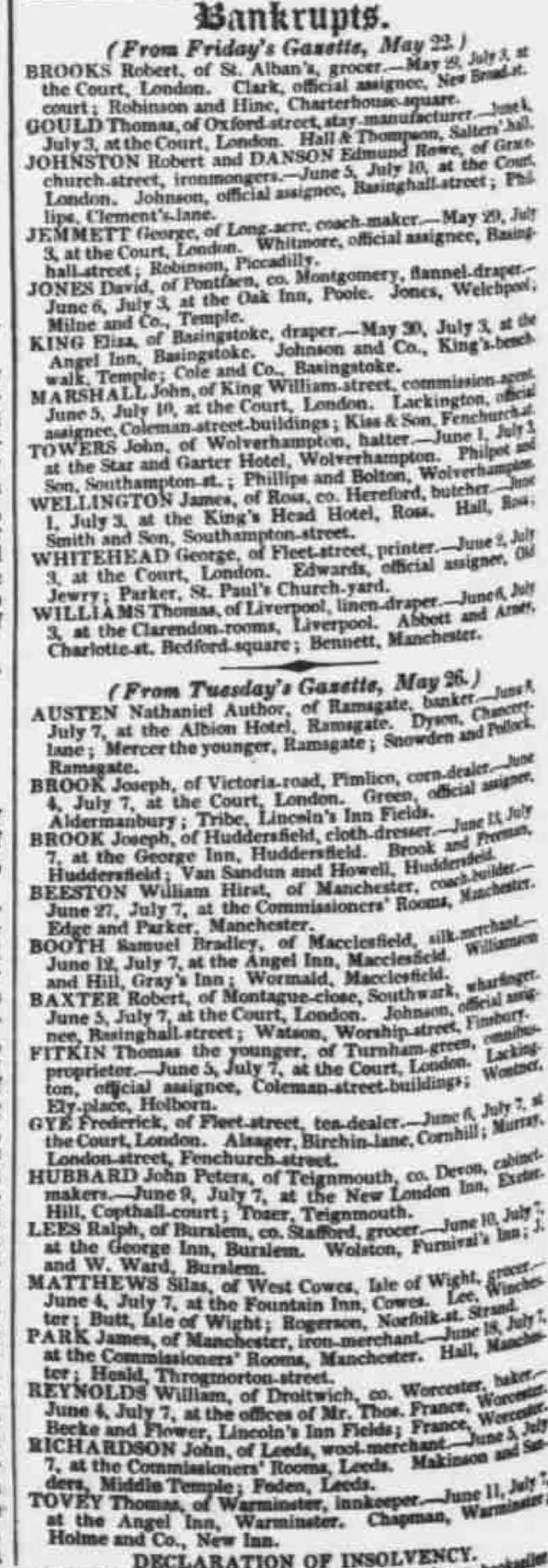
Bankruptcies (From Friday’s Gazette, May 22)
-
BROOKS, Robert – Grocer, St. Albans.
- Declared bankrupt May 22, July 3, at the Court in London.
- Official Assignee: Clark
- Legal Representatives: Robinson and Hine, Charterhouse-square.
-
GOULD, Thomas – Hat Manufacturer, Oxford Street.
- Declared bankrupt July 3 at the Court in London.
- Legal Representatives: Hall & Thompson, Salters’ Hall.
-
JOHNSTON, Robert & DANSON, Edmund Rowe – Ironmongers, Church Street.
- Declared bankrupt June 5, July 10 at the Court in London.
- Official Assignee: Johnson, Basinghall Street.
- Legal Representatives: Fisher, Clement’s Lane.
-
JEMMETT, George – Coachmaker, Long Acre.
- Declared bankrupt May 26, July 3 at the Court in London.
- Official Assignee: Whitmore, Basinghall Street.
- Legal Representatives: Robinson, Piccadilly.
-
JONES, David – Flannel Draper, Pontypool, Montgomery.
- Declared bankrupt June 6, July 3 at the Oak Inn, Poole.
- Legal Representatives: Jones, Welchpool.
-
KING, Edward – Draper, Basingstoke.
- Declared bankrupt May 30, July 3 at the Angel Inn, Basingstoke.
- Legal Representatives: Johnson & Co., King’s Bench.
-
TOWERS, John – Hatter, Wolverhampton.
- Declared bankrupt June 5, July 3 at the Star and Garter Hotel, Wolverhampton.
- Legal Representatives: Phillips and Son, Southampton Street; Phillips & Bolton, Wolverhampton.
-
WELLINGTON, James – Butcher, Ross, Herefordshire.
- Declared bankrupt July 3 at the King’s Head Hotel, Ross.
- Legal Representatives: Hall, Basinghall Street; Smith and Son, Southampton Street.
-
WHITEHEAD, George – Printer, Fleet Street, London.
- Declared bankrupt June 3, July 3 at the Court in London.
- Official Assignee: Edwards.
- Legal Representatives: Parker, St. Paul’s Churchyard.
-
WILLIAMS, Thomas – Linen Draper, Liverpool.
- Declared bankrupt June 6, July 3 at the Clarendon Rooms, Liverpool.
- Legal Representatives: Abbott & Armstrong, Bedford Square; Bennett, Manchester.
Historical Analysis: Economic and Social Context in 1840
In 1840, Britain was experiencing a period of economic turbulence, despite the growth of the Industrial Revolution. The list of bankrupts in this document reflects the struggles of small business owners, merchants, and tradesmen facing increasing competition and financial instability.
1. Professions and Economic Struggles
Many of the individuals declared bankrupt were involved in retail, trade, and manufacturing:
- Grocers, hatters, drapers, ironmongers, and printers—all professions that depended on stable commerce.
- The Industrial Revolution was shifting economic power toward larger-scale manufacturing, making it harder for small businesses to survive.
2. The Bankruptcy Process in 1840
The Bankruptcy Act of 1831 was still in effect at this time. It introduced official assignees (court-appointed individuals) to manage debtors’ assets fairly among creditors.
- Bankruptcy was publicly announced in newspapers to warn potential creditors.
- Courts and local inns (such as the Angel Inn, Oak Inn, and Star & Garter Hotel) were used for hearings, especially in towns where there were no formal court buildings.
3. Consequences of Bankruptcy
- Bankrupts were often socially ostracised—losing not just their business but also their reputation.
- Some debts could lead to prison if fraud was suspected.
- By 1849, the Insolvent Debtors Act allowed more bankrupts to be discharged, but in 1840, they still faced harsh penalties.
Genealogical Significance
If you are researching family history, bankruptcy records like this are invaluable:
- They provide full names, occupations, and locations—useful for tracking ancestors.
- Official assignees and legal representatives can hint at business connections.
- The dates and locations of hearings show where a person lived and conducted business.
Conclusion
This list of bankruptcies from the Stamford Mercury (29 May 1840) offers insight into the struggles of small business owners in the Victorian era, the economic forces at play, and the legal framework surrounding debt and insolvency. It’s a valuable document for both economic historians and genealogists.
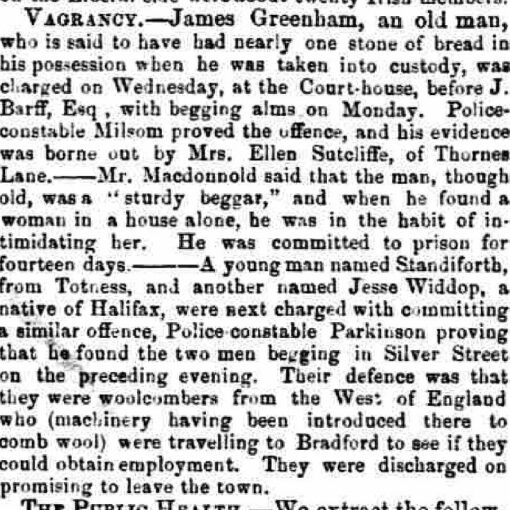
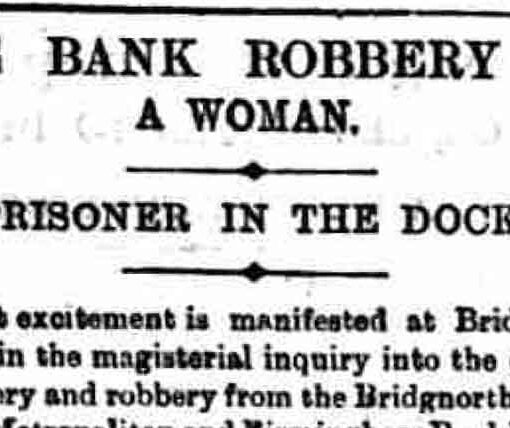
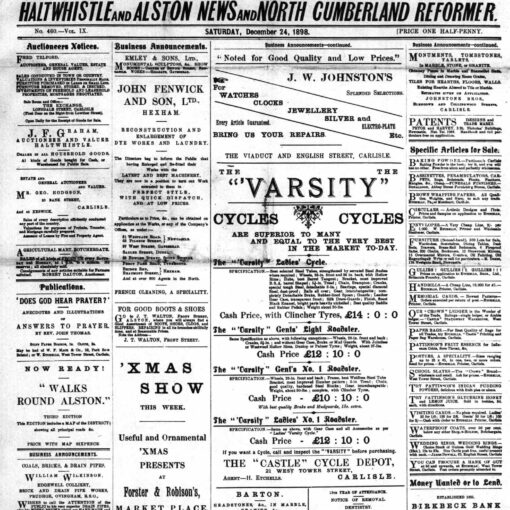
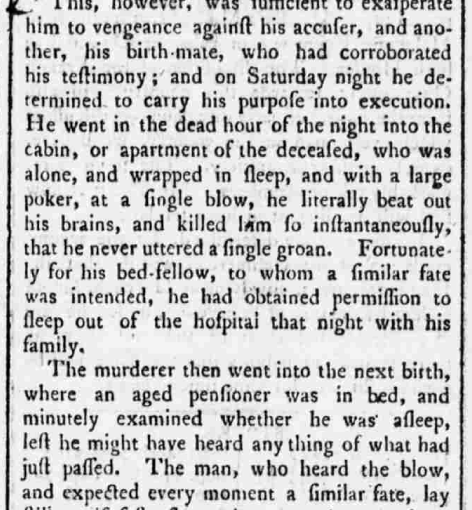
The History of the Stamford Mercury
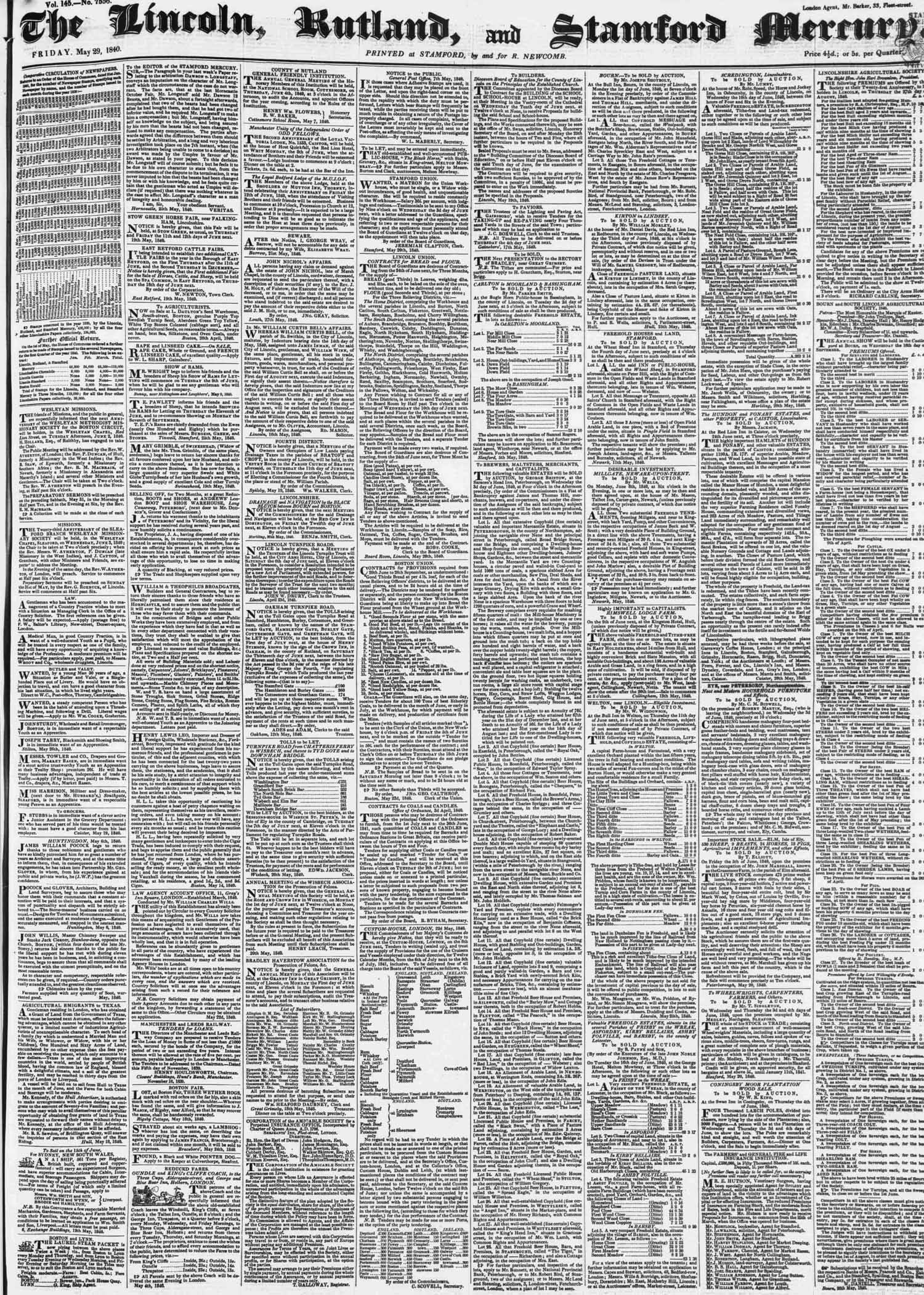
The Stamford Mercury is one of Britain’s oldest surviving newspapers, with a rich history spanning over three centuries. It has played a significant role in regional journalism, reporting on local events, national news, and issues that have shaped the fabric of Lincolnshire, Rutland, Northamptonshire, and Cambridgeshire.
Origins and Early Years (1695 – 18th Century)
- The Stamford Mercury was founded in 1695, making it one of the oldest continuously published newspapers in the world.
- Its establishment coincided with the lapse of the Licensing of the Press Act 1662, which had previously restricted the number of printing presses and publications. With these restrictions lifted, regional newspapers began to flourish.
- Initially, the paper focused on advertisements, public notices, and reports on trade, agriculture, and commerce, reflecting Stamford’s importance as a market town and coaching hub on the Great North Road (A1).
Expansion and Growth (18th Century)
- During the 18th century, the Stamford Mercury expanded its coverage to include:
- Parliamentary news
- Reports from the London Gazette
- Local assizes (court proceedings)
- It became a vital source of information for landowners, farmers, and businessmen, reflecting Stamford’s role as an economic and political centre in the East Midlands.
- The newspaper was printed on hand-operated presses and distributed via mail coaches along major routes.
Stamford Mercury in the 19th Century (Victorian Era)
- By the 19th century, the Stamford Mercury had firmly established itself as a weekly publication, typically released on Fridays.
- The 1800s saw the introduction of sections on bankruptcies, auctions, and probate notices, catering to both the business community and legal professionals.
- Major topics covered included:
- Local bankruptcies and insolvency proceedings (such as the page you provided from 1840).
- Political reforms (e.g., Great Reform Act of 1832).
- Railway developments, including the arrival of the Midland Railway in Stamford in 1846, which brought more visitors and commerce.
Influence on Society and Politics (19th Century)
- The Stamford Mercury became a powerful platform for discussing national issues like:
- Corn Laws (important to Lincolnshire farmers).
- Labour rights and Poor Law reforms, which affected local workhouses.
- Criminal cases and public hangings, often reported in graphic detail.
- It played a crucial role in promoting public discourse and political reform, influencing opinion among local voters and landowners.
Technology and Modernisation (20th Century)
- In the 20th century, the Stamford Mercury transitioned from letterpress printing to modern offset printing, keeping up with technological advancements.
- During both World Wars, the newspaper continued publication, providing coverage of local soldiers and wartime efforts, including rationing updates and casualty lists.
- By the 1950s, it had incorporated photographs, creating a more engaging format for readers.
Digital Era and 21st Century
-
In the 2000s, the Stamford Mercury launched its online edition, making its articles accessible to a global audience.
-
The newspaper continues to cover local events, including:
- Council meetings
- Community events
- Local elections
- Sports (e.g., Stamford AFC, local cricket and rugby matches)
-
Today, it serves not only as a news source but also as an archive of local history, with its historical issues frequently used for genealogical research and academic studies.
Genealogical and Historical Importance
- For historians and genealogists, the Stamford Mercury is a treasure trove, containing:
- Birth, marriage, and death notices
- Court proceedings (e.g., bankruptcy cases from 1840)
- Inquest reports
- Public auctions and property sales
Legacy
-
The Stamford Mercury holds the title of being one of the oldest continuously published newspapers in the world, alongside:
- Berrow’s Worcester Journal (1690)
- The London Gazette (1665)
-
It has earned a reputation as the “Voice of Lincolnshire”, having documented over three centuries of local, regional, and national history.
Conclusion
The Stamford Mercury is more than just a newspaper—it is a historical record, a community voice, and a window into British social and economic life from the late 17th century to the present. Its pages have recorded the triumphs and tragedies of generations and remain a vital resource for historians, researchers, and genealogists alike.
In brief
Exploring the Rich Legacy of the Stamford Mercury: Britain’s Oldest Newspaper #StamfordMercury #BritishHistory #JournalismHistory #HistoricNewspapers #MediaHeritage