The Mohocks: Britain’s Notorious Night-Walkers of the Early 1700s
Bowie and the Mohocks
In 2016, archivists discovered that David Bowie’s final, unfinished project was not only his last album Blackstar, but also the beginnings of an “18th-Century musical” called The Spectator. Hidden in his study were notes on London crime, satire, and society, including references to the thief Jack Sheppard, the thief-taker Jonathan Wild, and a notorious gang of young aristocrats known as the Mohocks.
Bowie imagined them attacking a “central figure” in his planned stage work — proof that, three centuries on, the Mohocks’ name still carries the same mix of menace and fascination. Their legend, born in 1712 London, ridiculed in The Spectator essays, and feared again in Edinburgh in 1738, has left a cultural echo strong enough to capture the imagination of one of Britain’s most celebrated artists.
The Edinburgh Report, 1738
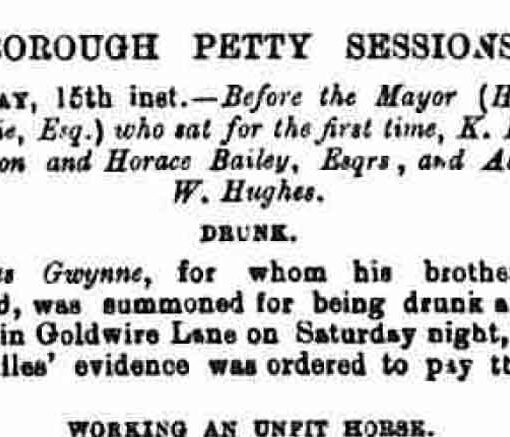
On 28 November 1738, the Edinburgh press recorded a disturbing incident:
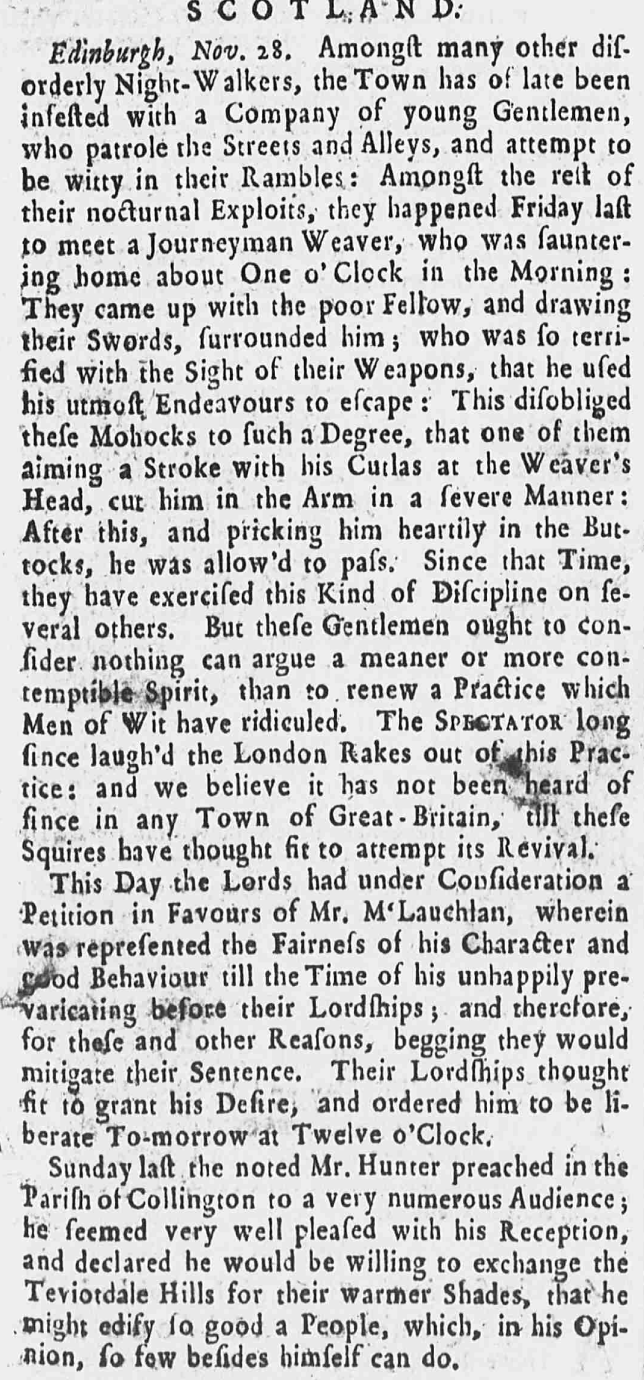
“Amongst many other disorderly Night-Walkers, the Town has of late been infested with a Company of young Gentlemen, who patrole the Streets and Alleys, and attempt to be witty in their Rambles… One of them aiming a Stroke with his Cutlas at the Weaver’s Head, cut him in the Arm in a severe Manner: After this, and pricking him heartily in the Buttocks, he was allow’d to pass.”
The report called them Mohocks — reviving a name that had first terrified Londoners more than two decades earlier.
The Origins of the Mohock Scare
The Mohocks first entered public notice in 1712, when pamphlets, gossip, and newspapers reported that a group of aristocratic rakes had banded together as a “nocturnal fraternity.” Their name was borrowed from the Mohawk people of North America, chosen to suggest savagery and barbarity.
The Spectator, London’s leading journal of wit and manners, published one of the most influential accounts. In Issue No. 324 (12 March 1712), Richard Steele mocked what he described as the “Mohock Club,” presided over by an “Emperor of the Mohocks.” The piece satirically catalogued the gang’s supposed outrages: citizens slashed with swords, women rolled in barrels, victims forced to drink to excess, and others tumbled into the mud.
Whether Steele believed such excesses truly occurred, or merely used the rumours as fodder for satire, is not entirely clear. What is certain is that the Spectator ridiculed the idea that men of breeding and wit could indulge in such pointless barbarity.
Panic in the Streets
The panic spread rapidly. Jonathan Swift noted in his Journal to Stella that “Grub-street papers about them fly like lightning,” though he suspected there was “very little truth in the whole story.”
Despite such doubts, the fear of the Mohocks became a public obsession. So strong was the alarm that Queen Anne issued a royal proclamation in March 1712, offering a reward of £100 for the capture of any Mohock. Patrols were strengthened, magistrates were on alert, and Londoners walked the streets in dread of sudden assault.
Sport in Cruelty
The crimes attributed to the Mohocks were as theatrical as they were cruel. Victims were allegedly:
-
Slashed across the face, leaving scars known as “the Mohock’s mark.”
-
Rolled in barrels down steep streets, sometimes women as targets.
-
“Tipped the Lion”—forced to drink until violently sick.
-
Stabbed in the legs, in a mockery of dance.
-
Turned upside down in watchman’s boxes, left humiliated until discovered.
Whether such practices were ever carried out systematically is doubtful, but they resonated with the public’s fear of disorder and lawlessness.
Myth or Reality?
Modern historians have debated whether the Mohocks ever truly existed as an organised gang. Some, like Vic Gatrell in City of Laughter, suggest the Mohocks were more myth than menace — a moral panic fuelled by pamphlets, satire, and public unease. Others argue that while no formal club may have existed, drunken aristocratic rakes certainly committed assaults, and the name Mohock became a convenient label for them.
What is clear is that the panic struck a deep chord. The Mohock scare embodied anxieties about social order, youth culture, and the dangers of elite privilege.
Legacy
The Mohocks disappeared as quickly as they arose, their heyday limited to the spring of 1712. Yet their reputation endured: the name became shorthand for any violent, nocturnal gang of upper-class hooligans. The Edinburgh reports of 1738 show how persistent that memory was.
And now, thanks to Bowie’s rediscovered notes, we know the Mohocks nearly returned once more — this time on stage, in a musical that would have bridged Georgian satire with modern pop culture.
Sources:
-
The Spectator, No. 324 (12 March 1712).
-
Jonathan Swift, Journal to Stella.
-
John Gay, Trivia: or, The Art of Walking the Streets of London (1716).
-
Vic Gatrell, City of Laughter: Sex and Satire in Eighteenth-Century London (2006).
-
Contemporary Edinburgh press reports, 1738.
-
BBC News, Mark Savage, David Bowie’s secret final project discovered locked in his study (2025).