Brighton Gazette – Saturday 6 January 1900
The Keymer Railway Accident – The Verdict
Brighton Gazette – Saturday 6 January 1900
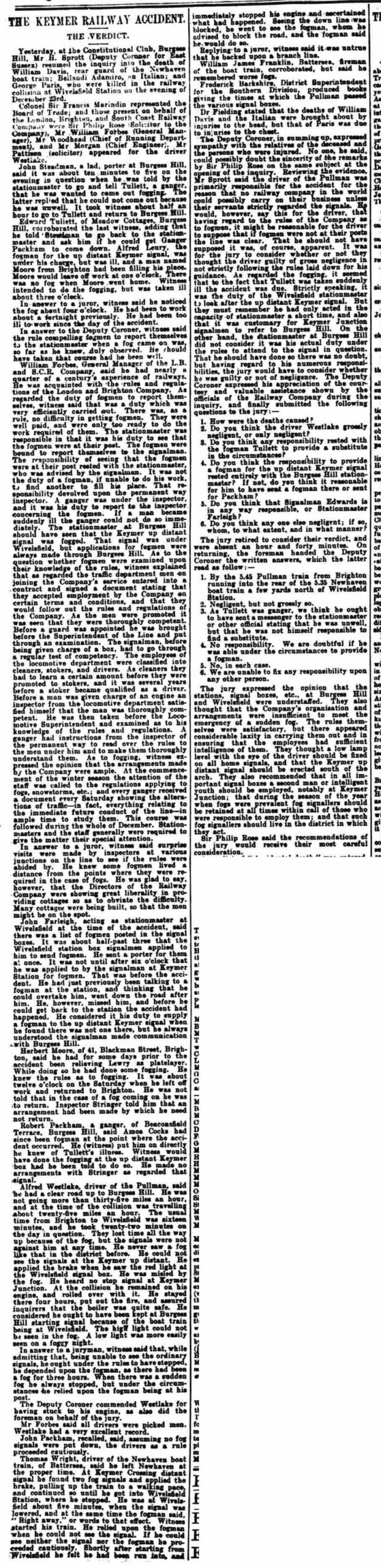
Yesterday, at the Constitutional Club, Burgess Hill, Mr. H. B. Bignell, Deputy Coroner for East Sussex, resumed the inquiry into the deaths of William Durrant, rear guard of the up Newhaven boat train; Baldini Adamore, an Italian; and George Paris White, who were killed in the railway collision at Wivelsfield Station on the evening of December 3rd.
Sir Francis Marindin represented the Board of Trade, and present on behalf of the London, Brighton and South Coast Railway Company were Sir Philip Rose (solicitor for the company), Mr. William Forbes (General Manager), Mr. Mordecai (Chief of Running Department), and Mr. Morgan (Chief Engineer). Mr. Morgan (solicitor) also appeared for the driver involved in the accident.
Testimonies from Railway Staff & Witnesses
John Stieman, a porter at Barrow Hill, stated that around 10 minutes to five, he was at the luggage question when he was told by a signalman to get a fogman to come out at Keymer Junction. However, the fogman refused to come, stating he was unable to leave his post. Another request was made for a fogman to be sent to Wivelsfield, but again, none came.
Robert Bale, of West Cottage, Burgess Hill, corroborated that the last contact with a fogman was unsuccessful, further emphasizing issues in railway communication and safety protocols.
The stationmaster at Burgess Hill admitted that applications for fogmen had been made but not fulfilled in time. He stated that the Keymer up distant signal was fogged, meaning the driver had limited visibility and could not properly respond to signals.
A railway inspector was asked why fogmen were not positioned properly, and he defended the railway company, stating that signalmen were responsible for deploying fogmen and that the employees of the company were thoroughly competent. However, concerns were raised about whether the railway management was truly enforcing safety regulations for fog conditions.
Driver’s Account & Train Speeds
The driver of the Pullman train, John Westlake, testified that at the time of the accident, he was not exceeding 35 miles per hour and that he had a clear road ahead to Burgess Hill.
The distance from Brighton to Wivelsfield was 44 minutes under normal circumstances, but with fog and signals obstructed, delays were inevitable.
Issues with Railway Safety Procedures
- Fogmen were either unavailable or not deployed in time.
- Signal communication was ineffective, leading to confusion among drivers.
- Stationmasters relied on fogmen who were not readily accessible, causing further delays in safety measures.
- Speed limits were questioned, but the driver was ultimately cleared of negligence.
The Coroner’s Verdict & Recommendations
The jury returned the verdict, stating that the collision was largely due to fog-related visibility issues and communication failures.
The Deputy Coroner praised the driver, John Westlake, for his attempts to follow procedures despite the circumstances. However, recommendations were made to:
- Improve deployment of fogmen at key locations.
- Ensure better communication between signal stations.
- Review railway operating procedures to prevent future accidents.
Immediately stopped his engine and ascertained what had happened. Seeing the down line was blocked, he went to see the fogman, whom he advised to block the road, and the fogman said he would do so.
Replying to a juror, witness said it was untrue that he backed upon a branch line.
William James Franklin, Battersea, fireman of the boat train, corroborated, but said he remembered worse fogs.
Frederick Barkshire, District Superintendent for the Southern Division, produced books giving the times at which the Pullman passed the various signal boxes.
Dr Fielding stated that the deaths of William Durrant and the Italian were brought about by injuries to the head, but that of George Paris White was due to injuries to the chest.
The Deputy Coroner, in summing up, expressed sympathy with the relatives of the deceased and the persons who were injured. No one, he said, could possibly doubt the sincerity of the remarks by Sir Philip Rose on the same subject at the opening of the inquiry. Reviewing the evidence, he praised the driver of the Pullman train, stating that it was not reasonable to hold him responsible for the accident for the reason that no railway company in the world could possibly carry on their business unless their servants strictly regarded signals.
He would, however, say this for the driver—that, having regard to the rules of the Company as to fogmen, it might be reasonable for the driver to suppose that if fogmen were not at their posts, the line was clear. That he should not have supposed it was, of course, apparent. It was for the jury to consider whether or not they thought the driver guilty of gross negligence in not strictly following the rules laid down for his guidance.
As regarded the fogging, it seemed that due to the fact that Tullett was taken suddenly ill, the accident was due. Strictly speaking, it was the duty of the Wivelsfield stationmaster to look after the up distant Keymer signal. But they must remember that he had only been in the capacity of stationmaster a short time, and also that it was customary for Keymer Junction signalmen to refer to Burgess Hill.
On the other hand, the stationmaster at Burgess Hill did not consider it was his actual duty under the rules to attend to the signal in question. That he should have done so there was no doubt, but having regard to his numerous responsibilities, the jury would have to consider whether he was guilty or not of negligence.
The Deputy Coroner expressed his appreciation of the courtesy and valuable assistance shown by the officials of the Railway Company during the inquiry and finally submitted the following questions to the jury:
Jury Questions & Verdict
-
How were the deaths caused?
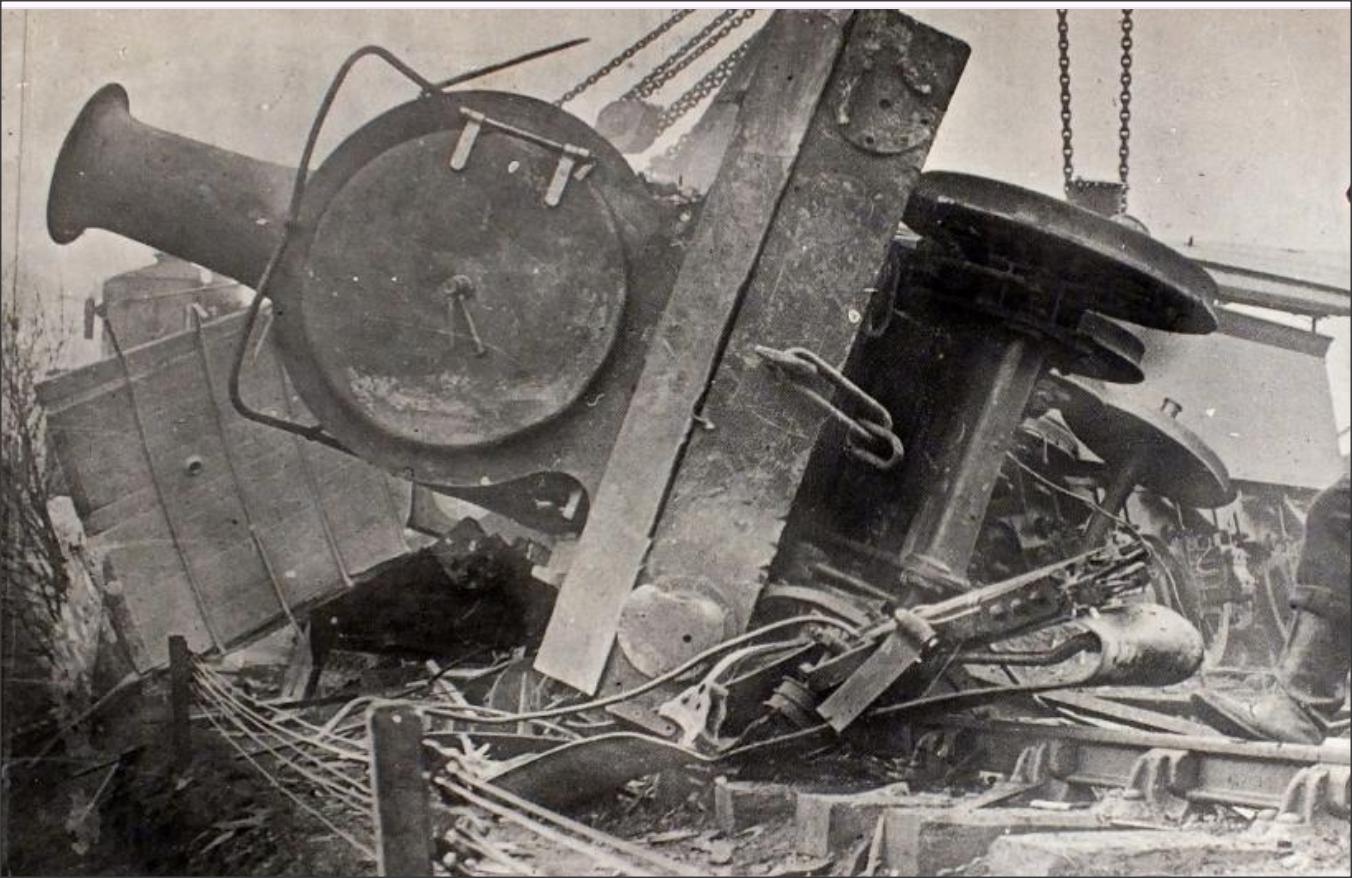
- By the 5.45 Pullman train from Brighton running into the rear of the 5.35 Newhaven boat train a few yards north of Wivelsfield Station.
-
Do you think the driver Westlake grossly negligent, or only negligent?
- Negligent, but not grossly so.
-
Do you think any responsibility rested with the fogman Tullett to provide a substitute in the circumstances?
- As Tullett was ganger, we think he ought to have sent a messenger to the stationmaster or other official stating that he was unwell, but that he was not himself responsible to find a substitute.
-
Do you think the responsibility to provide a fogman for the up distant Keymer signal rested entirely with the Burgess Hill stationmaster? If not, do you think it reasonable for him to have sent a fogman there or sent Packham?
- No responsibility. We are doubtful if he was able under the circumstances to provide a fogman.
-
Do you think that Signalman Edwards is in any way responsible, or Stationmaster Farleigh?
- No, in each case.
-
Do you think anyone else negligent; if so, whom, to what extent, and in what manner?
- We are unable to fix any responsibility upon any other person.
Jury’s Additional Observations & Recommendations
The jury expressed the opinion that the stations, signal boxes, etc., at Burgess Hill and Wivelsfield were understaffed. They also thought that the Company’s organisation and arrangements were insufficient to meet the emergency of a sudden fog.
The rules themselves were satisfactory, but there appeared to be considerable laxity in carrying them out and in ensuring that the employees had sufficient intelligence of them.
The jury recommended the following:
- A low lamp level with the eye of the driver should be fixed on all home signals.
- The Keymer up distant signal should be erected south of the arch.
- In all important signal boxes, a second man or intelligent youth should be employed, notably at Keymer Junction.
- That during the season of the year when fogs were prevalent, fog signalmen should be retained at all times within call of those who were responsible to employ them.
- That no fog signallers should live in a district in which they were not stationed.
Sir Philip Rose said the recommendations of the jury would receive their most careful consideration.
A verdict of “Accidental Death” was entered.
Analysis & Historical Implications
The Keymer railway accident in December 1899 highlighted serious safety and communication flaws within the British railway system at the time. The jury’s findings pointed towards structural inefficiencies, under-staffing, and poor implementation of safety protocols rather than gross negligence by any one individual.
This case exemplifies the transition period where railways relied heavily on manual operations, and fog posed a significant challenge for signallers and drivers. The absence of fogmen at critical locations was a major factor in the collision, yet the railway’s system did not have sufficient contingencies in place.
Key Takeaways from the Verdict & Recommendations:
-
Improved Lighting & Visibility for Train Drivers
- The suggestion to fix a low lamp at driver eye level was a precursor to later advancements in railway signalling, ensuring that drivers could see signals even in foggy conditions.
-
Better Staffing at Signal Boxes
- The recommendation that a second man be employed in critical signal boxes at all times was an important step toward modern safety standards, reducing the risk of miscommunication and oversight.
-
Availability of Fog Signallers
- The jury’s call to keep fog signalmen on standby during foggy seasons directly addressed the root cause of the accident, ensuring that safety measures were always in place.
-
Strengthening Railway Operational Procedures
- The verdict shifted focus from blaming individuals to improving railway infrastructure, paving the way for better accountability and structured procedures.
Final Thoughts
The Keymer accident was a wake-up call for the British railway industry, demonstrating the need for greater investment in staffing, signalling technology, and safety protocols.
Although a verdict of accidental death was recorded, the jury’s recommendations led to lasting improvements in railway safety, particularly in fog management, signalling, and operational efficiency.
This case remains a historically significant example of how railway accidents influenced policy changes, ultimately enhancing railway safety for future generations
Historical Context & Implications
The Keymer railway accident was one of several late 19th-century railway accidents caused by poor visibility, lack of effective safety communication, and reliance on manual signalling.
During this period, British railways were transitioning from manual to semi-automated signalling systems, but fog posed a significant challenge. The use of fogmen was a standard safety procedure, yet this case revealed serious flaws in their availability and management.
The verdict and recommendations likely contributed to improvements in fog signal systems and better training for railway staff. Eventually, technological advancements such as automatic block signalling and better communication networks would reduce the risk of similar accidents.
This inquest highlighted the need for stricter oversight of railway operations, especially in adverse weather conditions. It also raised questions about accountability in railway management, as responsibility was shifted between signalmen, fogmen, and inspectors rather than a clear safety protocol being enforced.
Conclusion
The Keymer railway accident serves as a significant case study in the history of British railway safety regulations. It underscored the dangers of miscommunication and insufficient safety measures in foggy conditions. The inquest likely influenced stricter enforcement of fogmen deployment and revisions to operational guidelines, paving the way for future improvements in railway safety and signalling technology.
The State of Railways in 1900
By 1900, Britain’s railway network was highly developed, serving as the primary mode of transportation for goods and passengers. The London, Brighton, and South Coast Railway (L.B. & S.C.R.), involved in this accident, was one of the major railway companies of the era. However, safety measures were still evolving. The railway system relied heavily on manual signaling and communication between stationmasters, signalmen, and train staff. Many safety practices were reactive rather than proactive, and despite the implementation of block signaling systems, human error remained a major risk factor.
Dangers and Risks in Railway Travel
During this period, railway travel was far from completely safe. Several key dangers included:
- Fog and Poor Visibility – Many accidents occurred due to fog, which obscured signals and track conditions.
- Signal Failures – The reliance on manual signal operation meant that missed or misinterpreted signals could lead to collisions.
- Lack of Safety Equipment – Unlike modern rail systems, automatic braking systems were not fully developed, and emergency response times were slow.
- Inadequate Communication – Communication between railway workers depended on written notices and verbal instructions, often leading to miscommunication.
- Fatigue and Understaffing – Railway workers were often overworked, leading to mistakes in judgment and slower reaction times.
Legal Aspects and the Role of the Coroner’s Inquest
Railway accidents in the 19th and early 20th centuries were typically followed by inquests led by local coroners. These inquests investigated the circumstances of fatalities, gathering testimony from railway officials, signalmen, and other relevant parties. The Keymer accident inquest, led by Deputy Coroner H.E. Bright, focused on:
- The role of the signalmen and whether they were properly trained.
- The presence and responsibilities of fogmen, who placed explosive signals to warn train drivers in poor visibility.
- The availability of fog signals and the competency of those assigned to use them.
- Whether systemic issues within the railway company contributed to the accident.
In this case, the jury ultimately ruled the deaths as “accidental,” absolving the railway company of legal responsibility but noting the need for safety improvements.
Individuals Involved in the Inquiry
Several key individuals participated in the inquest:
- Francis Marindin – Represented the Board of Trade, which was responsible for railway oversight.
- Sir Philip Rose – Solicitor for the railway company, defending its policies and actions.
- Mr. Willoughby – General Manager of L.B. & S.C.R., who testified about company procedures.
- John Howlett – District Superintendent, who provided insight into railway operations and fog signal practices.
- William Edward Tullett – Stoker at Barrow Hill, who reported on signal conditions on the night of the accident.
- George Parvin & Beliard Adams – The deceased railway workers whose deaths prompted the investigation.
Lessons and Changes Following the Accident
The Keymer accident underscored the importance of clear safety procedures, reliable fog signaling, and effective staff training. Although the verdict did not assign direct blame to the railway company, it likely contributed to increased scrutiny of railway safety and the gradual adoption of improved signaling and braking systems in the years to come. By the early 20th century, British railways began implementing automated safety measures, reducing reliance on human decision-making under hazardous conditions.
Conclusion
The inquest into the Keymer railway accident of 1899 highlights the challenges and dangers of railway travel at the time. While Britain’s rail network was one of the most advanced in the world, incidents like this revealed weaknesses in safety regulations, staffing policies, and technological preparedness. The accident serves as an important historical example of how early railway safety systems evolved in response to tragic events, leading to the safer rail travel we experience today.
The Brighton Gazette
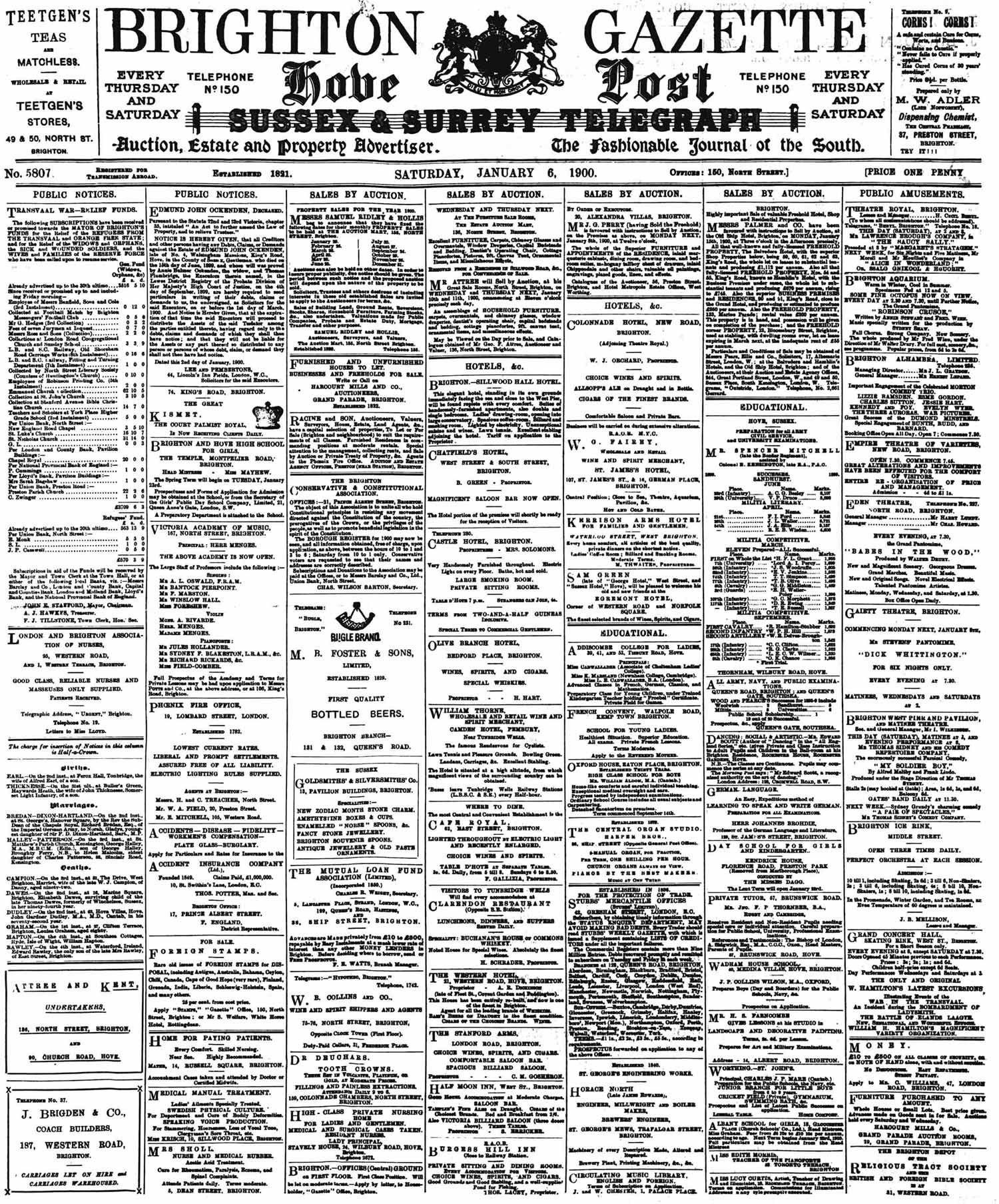
The Brighton Gazette was a prominent newspaper serving the coastal town of Brighton, England, throughout the 19th and early 20th centuries. Established in 1821, it played a significant role in reporting local news, events, and societal developments during a period of rapid growth and change in the region.
Founding and Early Years
The Brighton Gazette was first published on 22 February 1821 under the title Brighton Gazette, Sussex and General Advertiser or Worthing, Eastbourne and Hastings Fashionable Chronicle. It was a weekly publication, released every Thursday, and was priced at sixpence. The newspaper was founded by E.H. Creasy and initially operated from Donaldson’s Library, located at the corner of Old Steine and St James’s Street in Brighton. Aligned with Conservative principles, the Gazette aimed to provide comprehensive coverage of local and regional news, catering to the burgeoning population and the influx of visitors to the seaside resort.
Growth and Development
Throughout the 19th century, the Brighton Gazette expanded its reach and influence. By 1832, the publisher was John Baker, operating from 152 North Street. The newspaper underwent several relocations and changes in management, reflecting its growth and the dynamic nature of the publishing industry at the time. In 1839, the publication was managed by Creasy & Baker from 168 North Street. Under the stewardship of Charles Curtis in the mid-19th century, the Gazette’s circulation saw significant increases, with reports indicating a distribution of 65,000 copies in 1851, rising to 72,000 by 1853. This growth can be attributed to the paper’s comprehensive coverage of local events, politics, and social issues, as well as its engagement with the community.
Editorial Stance and Influence
The Brighton Gazette maintained a Conservative editorial stance, often reflecting the views and interests of its readership. It played a crucial role in shaping public opinion and discourse in Brighton and the surrounding areas. The newspaper was known for its detailed reporting on local governance, societal events, and issues pertinent to the community. Its influence extended beyond mere reporting; the Gazette was an active participant in the civic life of Brighton, often advocating for developments and policies it deemed beneficial to the town’s prosperity and well-being.
Later Years and Legacy
As the 20th century progressed, the Brighton Gazette continued to serve its community, adapting to the changing media landscape. In 1938, it was rebranded as the Brighton and Hove Gazette, reflecting the growing integration of the neighbouring towns. The newspaper continued its publication until 1985, when it was incorporated into the Brighton and Hove Leader, a free weekly newspaper. This transition marked the end of an era for the Gazette, but its legacy persists. The newspaper’s archives serve as a valuable resource for historians and researchers, offering insights into the social, political, and cultural evolution of Brighton over more than a century.
Today, the history of the Brighton Gazette is preserved through various archives and digital platforms, ensuring that its contributions to local journalism and community engagement are not forgotten. The newspaper’s commitment to reporting and its role in documenting the rich tapestry of Brighton’s history remain a testament to the vital function of local press in society.
In brief
🚆 The Keymer Railway Accident: The Verdict
Fog, miscommunication & railway safety failures—jury finds negligence but no gross misconduct in the 1899 Wivelsfield collision. Lessons for the future of British rail.
#KeymerAccident #RailwayHistory #VictorianRailways #TrainSafety #Wivelsfield #HistoricalNews
See alsoBoard of Trade Report