The Charlotte Winsor Baby Farming Case: Crime, Trial, and Legacy (1865–1894)
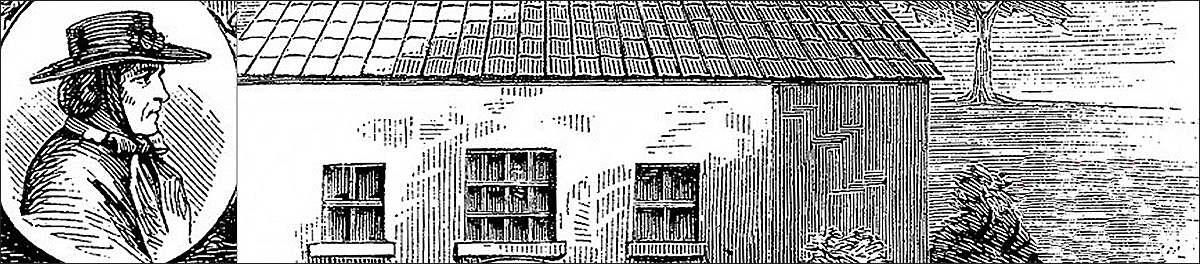 These pages present a detailed reconstruction of the disturbing case of Charlotte Winsor, a Devon woman convicted in 1865 of murdering a baby entrusted to her care under a baby farming arrangement in Torquay. The case shocked Victorian society and drew national media attention, highlighting the grim realities of child neglect, poverty, and the murky world of paid infant care. Winsor’s victim, Thomas Edwin Gibson Harris, was found suffocated and discarded by the roadside — a crime that led to her being sentenced to death, later commuted to life imprisonment. Drawing on rare newspaper archives, court transcripts, and genealogical research, this collection examines not only the events of the case itself, but also the social conditions that enabled it, the legal and moral debate it sparked, and Winsor’s remarkable three decades in prison. It also explores surprising connections to the Babbacombe murder case of 1884 and introduces key figures such as Isidore James Carter, whose legal career links both trials. This page is part of an ongoing effort to recover and present forgotten histories through authentic archival evidence.
Explore real British history – completely free.
Old British News is a 100% free, volunteer-run historical newspaper archive offering original British news articles from 1750 to 1950. Whether you’re researching family history, tracing a historical event, or simply curious about the past, this unique archive is here to help — with no charge, no ads, and no subscriptions.
Thomas Edwin Gibson Harris was a little baby boy who was found dead, wrapped in a newspaper. He was discovered abandoned in Torquay on February 15, 1865 — a grim and heart-wrenching discovery that shocked the local community. It soon emerged that he was the son of a young domestic servant named Mary Jane Harris. Under financial strain and social pressure, Miss Harris had entrusted the care of her infant son to a local woman named Charlotte Winsor, paying her a modest fee of three shillings a week to look after the child — a common practice known as “baby farming.”
After some time, however, the arrangement took a deadly turn. As the cost of care became too much for Mary Jane to bear, Mrs. Winsor allegedly offered to “dispose” of the child altogether — a chilling euphemism for what would become a deliberate act of infanticide. The baby boy, still just a few months old, was suffocated by Charlotte Winsor, and his small, naked body was wrapped in sheets of newspaper and left by the roadside in Torquay, discarded as though he were refuse.
According to the media in Devon and across other parts of the country, Charlotte Winsor was no stranger to this kind of arrangement. She was reportedly well-practised in the grim business of “putting away” children, and had done so more than once — referring to her services in disturbingly transactional terms. It was said that for a sum of £3 to £5, she would arrange for an unwanted child to be dealt with, permanently. What she referred to as a “service” was, in truth, a covert form of murder.
This case is the second of two major Victorian murder cases I have spent years researching. What makes it even more fascinating — and eerie — is that there appear to be tentative genealogical connections between this case and the more widely known Babbacombe murder of Emma Keyse in 1884. There is a very real possibility, for instance, that Mary Jane Harris may have been a blood relative of John Lee, the man wrongly convicted of the Babbacombe murder — later known famously as The Man They Couldn’t Hang. Even more curiously, Charlotte Winsor’s third husband, James Winsor, may also have had a familial link to the Lee family. These are, of course, speculative connections, but they are not beyond the realm of possibility in a tight-knit Devon community where family names, relationships, and reputations often intertwined.
There are also notable professional links between both the Winsor and Lee cases. Several officials and legal professionals involved in one case reappear in the other — most notably the sharp and often controversial Isidore James Carter (1848–1936), who was a prosecution lawyer in both cases. Carter’s long and eventful legal career left a distinct imprint on the judicial history of Torquay and South Devon. His life and role in these cases warrant further attention and will be explored in greater detail in future pages on this site.
I began researching and reconstructing the John “Babbacombe” Lee case back in the 1990s, eventually publishing the complete archive online — including trial transcripts, evidence summaries, and period commentary. I also co-authored a book on the subject and continue to work on several related projects that delve even deeper into the case’s historical and social context.
Around the same time, I also began investigating the lesser-known Charlotte Winsor case, using the same method: dismantling the story, sourcing all available evidence, and rebuilding the narrative using authenticated archival sources and contemporary reports. Unfortunately, the Winsor case had to be put aside for a time. But I’m pleased to say that work on it has now resumed in earnest. A large body of contemporary newspaper articles, court documents, and official correspondence is currently being traced, digitised, and transcribed — much of it being published here for the first time.
Together, these two cases not only reflect the darker underside of Victorian Devon but also illustrate how social class, gender, poverty, and justice intersected in an age of public morality and private cruelty. The story of Charlotte Winsor is not just the story of one crime — it is a mirror to a forgotten world, and one that still has much to reveal.